
Evening Star
RF@80 Vol. 8

This week the title track from Fripp & Eno’s second album, Evening Star is paired with Heroes on the Spotify playlist, highlighting the longstanding collaboration between RF and former Roxy Music member and ambient music pioneer Brian Eno.
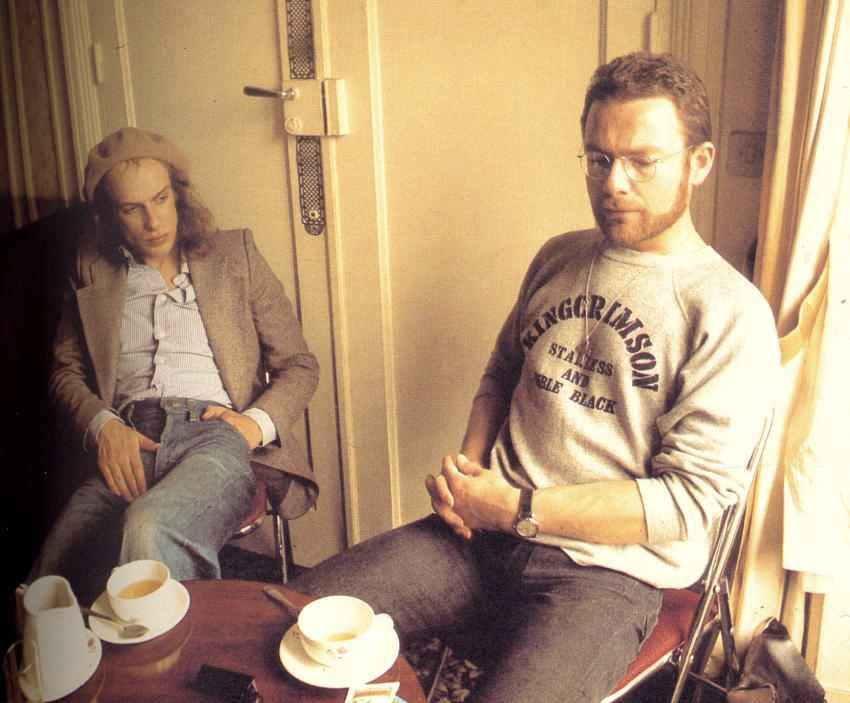
Brian Eno and Robert Fripp in Paris on the European Tour, 1975.
Along with sessions for Eno’s Another Green World, these were Robert’s first recordings post the break-up of King Crimson in 1974. Most of the work for the album took place in July 1975 following Fripp & Eno’s short European tour. Recording took place at several locations, including Eno’s Maida Vale flat. The Evening Star backing guitar part (which was made into a tape loop by Eno) plus the guitar solo were recorded at AIR Studios in London, with Robert playing his ’59 Les Paul (in Drop D tuning) plugged into his custom Pete Cornish pedal board and a Fender Champ amplifier. Later additions from Eno using the EMS Synthi briefcase synth took place at Basing Street studios in Notting Hill.
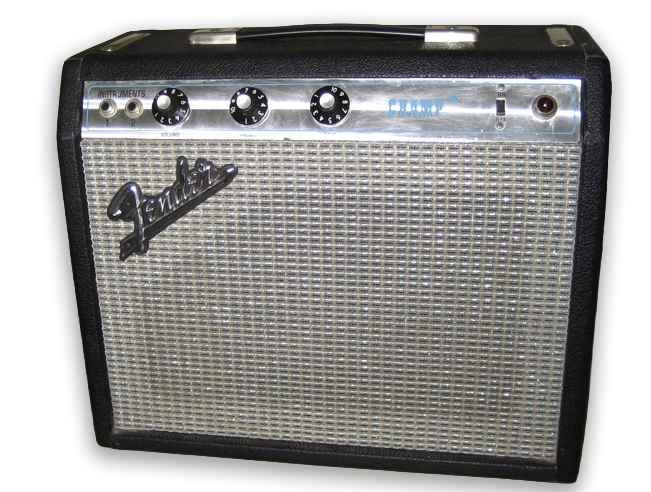
Fripp's Fender Champ used on Evening Star.
A few weeks after the recordings were completed, Robert withdrew from the music industry and began a 10 month retreat at J. G. Bennett’s International Academy for Continuous Education at Sherborne House. During this time the album was released, and Eno paid a visit to open the Sherborne village fete in the summer of ’76.
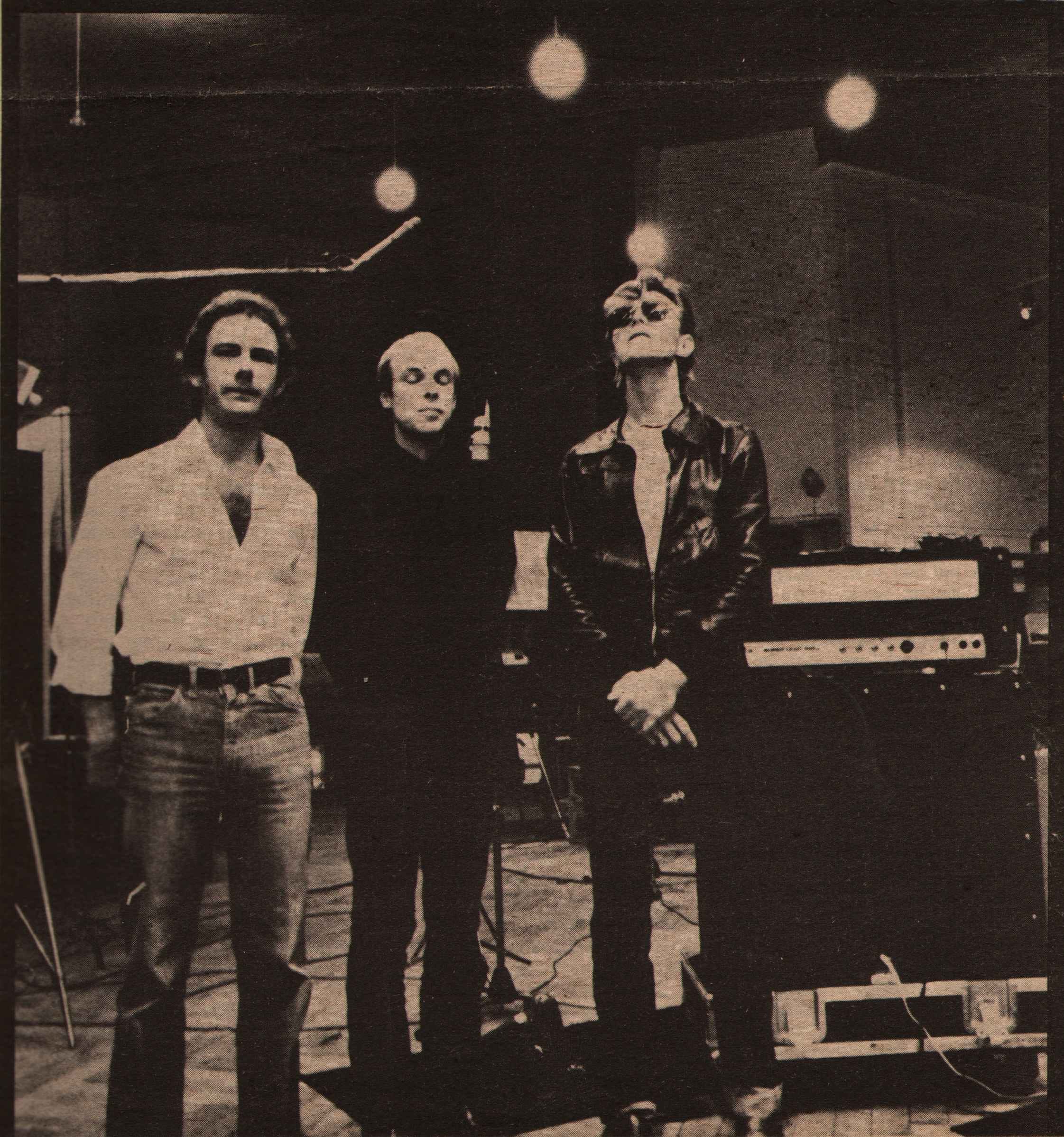
Fripp, Eno and Bowie at Hansa Studios in Berlin, July 1977.
In February 1977 Robert relocated to New York. It was there, while living at an apartment on Waterside Plaza by the East River, that he received the now-famous phone call from Eno in Berlin, with the invitation from David Bowie that he come and play some “hairy rock n roll guitar” on a record they were making. Armed with the same Les Paul and Cornish pedal board used on Evening Star, the guitarist was soon on a plane and headed for Hansa Studios by the Berlin Wall. Plugging into a Marshall stack without use of a fuzz pedal, and using his proximity from the amp to control the sustain, he made the three passes that were blended by engineer Tony Visconti to create the now familiar lead guitar part on the iconic track Heroes.
Listen to this week’s commentary to hear the full story.
Download: https://dgmlive.com/tour-dates/2855
To listen to Heroes by David Bowie, follow the Spotify playlist: Robert Fripp @ 80
Also available on the official YouTube channel:
I admit to not having listened to An Index Of Metals as much as I do the other side of the album. But even before CDs much less streaming it was easy to just play side one again and again.
That was one of the album covers by my uncle, Peter Schmidt. He was my dad's older half brother, from my grandmother's first marriage, hence the difference in surnames. The other covers by him were ‘Taking Tiger Mountain (by Strategy)’ and ‘Before and After Science’. For the former my uncle used a lithograph technique he'd developed that varied the colours of each print. The latter was subtitled ‘14 Songs’ and had a limited edition (the first 1,000 copies) with four prints of my uncle's watercolours (he actually used acrylics. When my parents asked him for advice on what paints to get me he recommended the same acrylics he used. They were very versatile and could be used thickly, like ‘Fainting in Coils’ (as the Mock Turtle describes it in ‘Alice's Adventures in Wonderland’: “The drawling master was an old Conger eel. He taught us drawling, stretching and fainting in coils”. The Mock Turtle's teacher was a sea turtle. “Why did you call him tortoise if he was a turtle?” asked Alice. “We called him tortoise because he taught us!”. Sorry, I digress), or diluted like watercolours). The pen and ink outlines of those prints were on the back cover.